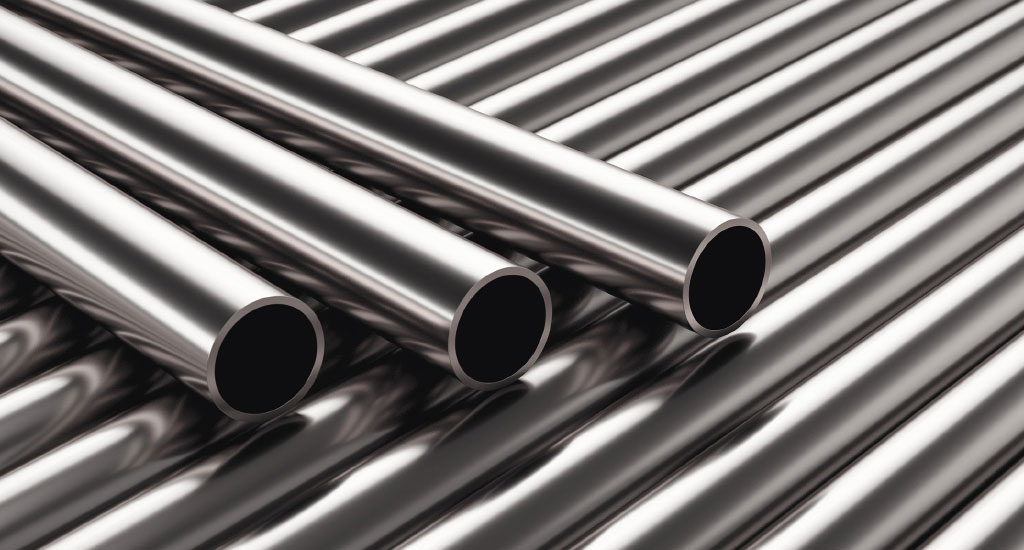
What Is Stainless Steel Pipe?
Stainless steel pipes are engineered from iron-based alloys containing chromium, nickel, molybdenum, and sometimes titanium. Chromium forms a passive oxide layer that prevents corrosion, while nickel and molybdenum enhance resistance to pitting, crevice corrosion, and high-temperature degradation. Titanium stabilizes the alloy and prevents carbide precipitation in high-temperature applications.
The strength of stainless steel pipes often exceeds 600 MPa, and they maintain structural integrity at temperatures up to 870°C, making them suitable for demanding industrial environments. Grades commonly used include 304/304L and 316/316L, selected based on factors such as corrosive media, pressure, and temperature. The choice of grade directly impacts long-term reliability and operational safety.
In piping systems, stainless steel’s performance is defined by its:
- Corrosion resistance mechanism: passive oxide layer and alloying elements
- Mechanical strength: high tensile strength for high-pressure applications
- Thermal tolerance: stable in extreme temperature ranges
- Sanitary and non-reactive properties: ideal for food, beverage, and pharmaceutical systems
Why Stainless Steel Is Chosen for Piping Applications
Industries worldwide prefer stainless steel pipes due to their:
- Corrosion resistance: withstands aggressive chemicals, saline water, and oxidative environments
- High tensile strength and pressure capacity: supports pipelines under high stress
- Temperature performance: operates efficiently across extreme heat and cold
- Hygienic surface: smooth, non-porous surfaces suitable for clean processing
- Longevity and low maintenance: reduces lifecycle costs
- Sustainability: fully recyclable, minimizing environmental impact
- Aesthetic and architectural value: supports visible structural and design applications
Types of Stainless Steel Pipe Used in Applications
Seamless Stainless Steel Pipe
Seamless pipes are produced through extrusion or rotary piercing, resulting in uniform wall thickness and high structural integrity. Without welded seams, these pipes minimize weak points, making them ideal for high-pressure, high-temperature, and critical process systems.
Applications:
- Oil and Gas: transport of hydrocarbons, subsea pipelines
- Power Generation: steam and gas distribution
- Chemical Processing: handling aggressive chemicals
- Food & Beverage: hygienic transport and processing
Welded Stainless Steel Pipe
Welded pipes are formed by rolling strips or plates and welding them using methods such as ERW (Electric Resistance Welding) or Laser Beam Welding (LBW). They offer:
- Cost-effective solutions
- Precise diameters and wall thicknesses
- Wide grade availability: 201, 304, 304L, 316L, 430
Applications:
- Process piping in chemical and petrochemical plants
- Structural frameworks and architectural installations
- Sanitary systems in food, beverage, and pharmaceutical facilities
Typical welded pipe dimensions range from 6 mm to 219 mm in diameter and wall thicknesses from 0.6 mm to 5 mm, providing versatility across industries.
Stainless Steel Pipe Fittings
Fittings ensure system integrity and optimized fluid flow. Common types include:
- Elbows (45°, 90°) for directional changes
- Tees, Y-fittings, crosses for branching pipelines
- Reducers (concentric and eccentric) for diameter transitions
- Couplings and caps for secure connections
- Flanges (slip-on, weld neck, blind) for detachable joints
Grades such as 304 and 316L are selected based on mechanical and chemical resistance requirements, ensuring reliability in high-pressure and high-temperature systems.
Key Stainless Steel Pipe Applications by Industry
Oil and Gas Industry
Stainless steel pipes excel in upstream, midstream, and downstream applications:
| Application Stage | Requirement | Stainless Steel Advantage |
| Exploration | High tensile strength | Withstands mechanical stress |
| Production | Corrosion resistance | Prolongs pipeline life |
| Transportation | Pressure handling | Maintains integrity under load |
| Refining | High temperature | Operates efficiently at extreme heat |
Grades 304 and 316 are preferred for subsea pipelines due to pitting and crevice corrosion resistance. Both onshore and offshore pipelines benefit from stainless steel’s durability and minimal maintenance requirements.
Chemical and Petrochemical Industry
Pipes in this sector transport aggressive chemicals at high pressures and temperatures. Grades like 304L, 316L, and 321 resist corrosion, pitting, and crevice attack. Seamless pipes are preferred for critical systems to eliminate weld weak points. Compliance with ASTM A312 and ASME B36.19M ensures precise dimensions and reliability.
Food and Beverage Industry
Stainless steel pipes maintain hygienic conditions and prevent contamination. Applications include:
- Processing equipment: mixers, pasteurizers, homogenizers
- Brewing systems: fermenters and storage tanks
- Dairy operations: milk pasteurization and storage
Grades 304 and 316 withstand high-pressure cleaning and chemical exposure. Seamless construction and smooth surfaces (Ra <0.5 µm) facilitate compliance with stringent sanitary standards.
Medical and Pharmaceutical Industry
Seamless 316L stainless steel pipes are used in:
- Sterile fluid and gas transport
- Pharmaceutical cleanrooms
- Medical gas distribution
The non-reactive surface and compatibility with orbital welding maintain sterility and prevent contamination in critical healthcare applications.
Water Treatment and Desalination
Stainless steel pipes handle freshwater, wastewater, and seawater, offering:
- Corrosion resistance to chlorides
- Durability under high pressure (>485 MPa tensile strength)
- Longevity with minimal contamination risk
They support filtration, chemical dosing, and distribution processes in water treatment and desalination plants.
Power Generation Industry
Used in boilers, heat exchangers, condensers, and steam systems, stainless steel pipes tolerate high pressures and temperatures:
| Application Area | Material Grade | Key Properties |
| Boilers | 304, 316 | High-temperature resistance |
| Heat Exchangers | 321, 347 | Corrosion resistance |
| Condensers | 904L | Stress corrosion cracking resistance |
| Steam Turbines | 304, 310 | High-pressure durability |
| Nuclear Reactors | 316L, 347H | Radiation resistance |
Seamless pipes ensure operational reliability, reducing downtime and maintenance costs.
Construction and Architecture
Stainless steel pipes provide:
- Structural integrity for load-bearing systems
- Plumbing and HVAC applications
- Architectural aesthetics: railings, facades
Grades 304 and 316 combine high tensile strength (up to 620 MPa), elongation (up to 40%), and corrosion resistance, supporting both functional and visual requirements.
Automotive and Transportation
Applications include:
- Exhaust systems: high-temperature tolerance up to 870°C
- Fuel and brake lines: high tensile strength, corrosion resistance
- Structural components: vibration and heat resistance
These pipes improve vehicle efficiency, longevity, and compliance with environmental standards.
Mining and Minerals Processing
Stainless steel pipes transport abrasive slurries and chemicals, offering:
- Resistance to wear and corrosion
- Structural support for mining equipment
- Long-term reliability in harsh environments
Grades such as 316L are widely used to maximize operational efficiency.
Agriculture and Farming
Used in:
- Irrigation systems: withstand high pressure, corrosive fertilizers
- Dairy farming: hygienic and non-contaminating
- Food processing: resistant to organic acids and cleaning agents
Seamless and welded pipes ensure consistent flow, durability, and compliance with sanitary regulations.
Where Welded Stainless Steel Pipes and Tubes Are Commonly Used
- Process piping systems
- Food, beverage, and pharmaceutical facilities
- Water treatment plants
- Structural and architectural projects
- Industrial fabrication and equipment manufacturing
Stainless Steel Pipe vs Other Piping Materials (Application Perspective)
- Carbon Steel: lower corrosion resistance, shorter lifespan
- Galvanized Steel: prone to scaling, lower temperature tolerance
- Copper: good corrosion resistance but higher cost and lower pressure handling
Stainless steel offers cost-effectiveness over the lifecycle, minimizing maintenance and replacements.
Emerging Trends in Stainless Steel Pipe Applications
- Advanced alloys: nitrogen-enhanced steels improve corrosion and mechanical properties
- Welding innovations: laser and friction stir welding for stronger joints
- Digital monitoring: IoT and predictive maintenance improve reliability
- Sustainability: recyclable grades and eco-friendly production methods
Frequently Asked Questions About Stainless Steel Pipe Applications
Q: How does temperature affect performance?
High temperatures reduce tensile strength, while low temperatures increase brittleness. Grade selection is key.
Q: Environmental benefits?
Recyclable, long-lasting, and corrosion-resistant, reducing ecological impact.
Q: Cost-effectiveness?
Although initially higher cost, stainless steel reduces long-term maintenance and replacement expenses.
Q: Maintenance requirements?
Regular inspections, cleaning, and protective coating monitoring ensure longevity.
Q: Recyclability?
Fully recyclable, preserving key properties for reuse in new manufacturing.
How to Choose the Right Stainless Steel Pipe for Your Application
- Analyze application environment (corrosive media, temperature, pressure)
- Determine pressure and temperature requirements
- Select appropriate grade and pipe type (Seamless vs Welded)
- Ensure compliance with ASTM, EN, DIN, or other relevant standards
Your Trusted Stainless Steel Pipe Partner – Hanhuang Steel
Hanhuang Steel has 9 years of expertise in manufacturing and supplying high-quality stainless steel pipes and tubes, serving diverse industries worldwide.
Our product range includes seamless and welded stainless steel pipes, square, round, rectangular, and oval tubes, and precision pipe fittings, all manufactured to meet ASTM, EN, and DIN standards.
With advanced production facilities, stringent quality control, and a commitment to timely delivery, Hanhuang Steel ensures reliable solutions for sectors such as oil and gas, chemical processing, food and beverage, pharmaceuticals, construction, and water treatment. Our products are engineered for durability, corrosion resistance, and high-pressure performance, making us a trusted partner for long-term infrastructure projects.For inquiries or custom solutions, reach out to Hanhuang Steel and experience unparalleled expertise in stainless steel piping systems.