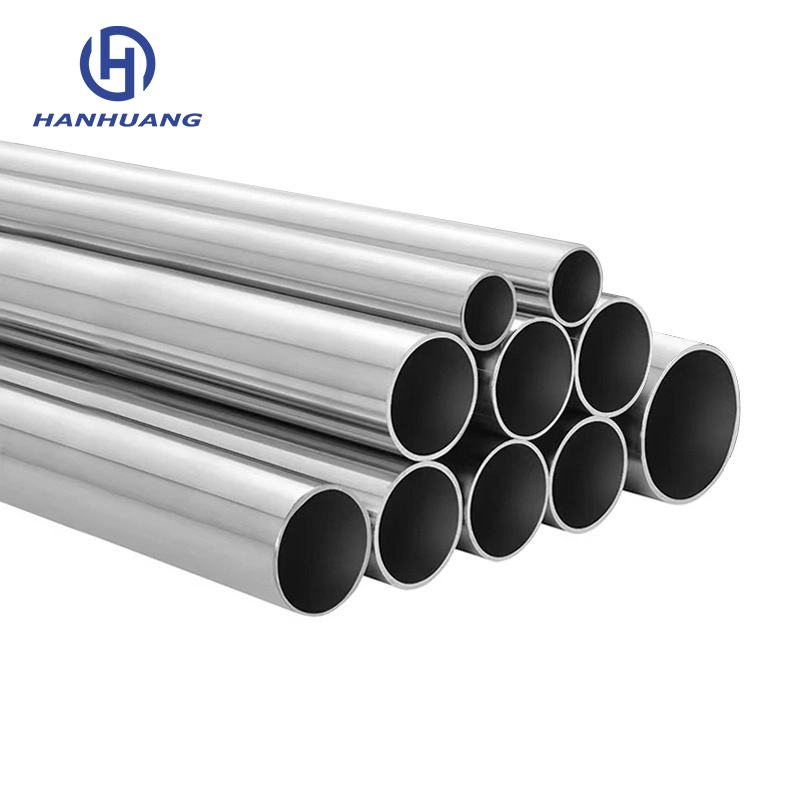


Stainless steel pipes are a cornerstone in industrial infrastructure, renowned for their durability and resistance to corrosion. Understanding the science behind their corrosion resistance, the types of corrosion they face, and the optimal engineering choices is critical for ensuring long-lasting performance. This guide delves into mechanisms, failure modes, grades, and practical selection strategies for stainless steel pipes, equipping engineers and decision-makers with actionable insights.
1. Understanding Corrosion in Stainless Steel Pipes
1.1 What Is Corrosion in Stainless Steel Pipes?
Corrosion is a natural process where metals deteriorate due to chemical reactions with their surrounding environment. For stainless steel pipes, this often involves interactions with oxygen, moisture, chlorides, or acids. While stainless steel is inherently resistant to rust and degradation, it is not completely immune—especially in aggressive environments.
1.2 Impact of Corrosion on Stainless Steel Piping Systems
Corrosion can manifest in multiple detrimental ways:
- Leakage: Localized pitting or crevice corrosion may perforate stainless steel pipes, leading to leaks and potential hazards.
- Structural Failure: Progressive material loss can weaken the pipe’s cross-section, compromising structural integrity.
- Contamination: In food, pharmaceutical, or water systems, corrosion products can contaminate the transported material.
- Economic Loss: Corrosion-induced failures often lead to costly repairs, downtime, and replacement expenses.
1.3 Why Corrosion Resistance Is Critical for Stainless Steel Pipes in Industrial Applications
Industries rely on stainless steel pipes for safe and durable operations:
- Oil & Gas: Harsh, chloride-rich environments demand high resistance to pitting and stress corrosion cracking.
- Chemical Processing: Pipes transport reactive chemicals; corrosion resistance prevents contamination and failures.
- Marine Applications: Continuous exposure to seawater and high chloride concentrations makes corrosion resistance essential.
- Food & Pharma: Hygienic, corrosion-free surfaces are critical for product safety.
- Water Treatment: Long-term reliability requires protection against scaling and localized corrosion.
2. Metallurgical Basis of Stainless Steel Pipe Corrosion Resistance
2.1 Role of Chromium and Passive Film Formation in Stainless Steel Pipes
The secret of stainless steel pipes’ corrosion resistance lies in chromium:
- Chromium ≥ 10.5% forms a thin chromium oxide layer on the surface.
- This passive film blocks oxygen and moisture, preventing rust.
- Even if scratched or damaged, the layer self-heals, regenerating its protective barrier.
2.2 Influence of Alloying Elements in Stainless Steel Pipes
Other elements enhance corrosion resistance and mechanical performance:
- Nickel (Ni): Improves toughness, ductility, and acid resistance.
- Molybdenum (Mo): Strengthens resistance against pitting and crevice corrosion.
- Nitrogen (N): Enhances localized corrosion resistance, particularly in duplex steels.
- Titanium (Ti) & Niobium (Nb): Stabilize against intergranular corrosion in welded structures.
2.3 Austenitic vs Duplex vs Ferritic Structures in Stainless Steel Pipes
- Austenitic (FCC): Excellent corrosion resistance, versatile, but sensitive to chloride SCC.
- Duplex: Combines high strength with superior chloride SCC resistance.
- Ferritic: Good general corrosion resistance; largely immune to SCC.
2.4 Breakdown of Passive Film in Stainless Steel Pipes
The passive film may fail under:
- Reducing acids or highly acidic environments
- Chloride attack from seawater or chemical exposure
- Mechanical damage or scratches
3. Types of Corrosion in Stainless Steel Pipes
3.1 General (Uniform) Corrosion in Stainless Steel Pipes
- Occurs in chemical plant environments with strong acids.
- Can be predicted using published corrosion rate data.
3.2 Pitting Corrosion in Stainless Steel Pipes
- Triggered by chloride concentration, high temperatures, or low pH.
- Localized attack leads to perforation and pit propagation, which can compromise pipe integrity.
3.3 Pitting Resistance Equivalent Number (PREN) for Stainless Steel Pipes
- Formula: PREN = %Cr + 3.3 × %Mo + 16 × %N
- Predicts susceptibility to pitting; higher PREN = better resistance.
- ASTM G48 tests are used to validate resistance.
3.4 Crevice Corrosion in Stainless Steel Pipes
- Occurs in micrometer-scale gaps, under gaskets, or at weld overlaps.
- Design considerations: avoid tight crevices and ensure circulation of fluids.
3.5 Galvanic (Bi-Metallic) Corrosion in Stainless Steel Pipes
- Happens when stainless steel contacts a less noble metal in an electrolyte.
- Area ratio matters: large anodic surface vs small cathodic surface reduces corrosion.
- Prevented by isolating dissimilar metals or controlling electrolyte exposure.
3.6 Contact Corrosion in Stainless Steel Pipes
- Caused by carbon steel debris left on stainless steel surfaces.
- Workshop management: dedicated stainless steel handling, protective plastic or wood strips.
3.7 Stress Corrosion Cracking (SCC) in Stainless Steel Pipes
- Triggered by tensile stress + chloride exposure.
- Temperature thresholds matter; 304 vs 316 vs duplex steels show different resistances.
- Mitigation: annealing, shot peening, or residual stress control.
- Notable case: indoor chlorinated swimming pools causing SCC at 30–40°C.
3.8 Sulphide Stress Corrosion Cracking (SSC) in Stainless Steel Pipes
- Occurs in H2S environments.
- NACE MR0175 defines material limitations.
- Key factors: stress level, environment, temperature (60–100°C max susceptibility).
- Hardness limit: 22 HRC for common austenitic grades.
3.9 Intergranular Corrosion in Stainless Steel Pipes
- Caused by sensitization (425–850°C) and carbide precipitation along grain boundaries.
- Welding can exacerbate this effect.
- Prevention: low-carbon grades (304L/316L) or stabilized grades (321, 347).
- ASTM A262 testing provides evaluation.
4. Environmental and Operational Factors Affecting Corrosion Resistance in Stainless Steel Pipes
- Chloride concentration (ppm levels)
- Temperature effects
- pH influence
- Stress levels
- Flow conditions & stagnation
- Surface condition & roughness
- Heat tint and welding zones
5. Selecting the Right Stainless Steel Pipe Grade
- 304 vs 316: 316 preferred in chloride-rich or chemical environments.
- 304L / 316L: For welded structures to prevent sensitization.
- Duplex 2205 / Super Duplex: High strength + chloride SCC resistance.
- Ferritic grades: General corrosion resistance; immune to SCC.
- High-Temperature Grades (H variants): Maintain strength at elevated temperatures.
- PREN-Based Selection: Use PREN for pitting-sensitive applications.
6. Design & Fabrication Considerations to Prevent Corrosion in Stainless Steel Pipes
- Avoid tight crevice designs
- Control residual stress during fabrication
- Apply proper welding practices
- Isolate stainless steel from dissimilar metals
- Maintain workshop cleanliness and prevent carbon steel contamination
7. Surface Treatment & Corrosion Prevention Methods for Stainless Steel Pipes
- Passivation: Nitric acid treatment to restore passive film
- Pickling: HF + HNO3 to remove contamination and scales
- Protective coatings: Optional barrier against aggressive chemicals
- Surface cleaning protocols: Prevent contact corrosion and maintain hygiene
8. Testing & Standards for Corrosion Evaluation of Stainless Steel Pipes
- ASTM G48: Pitting test
- ASTM A262: Intergranular corrosion
- NACE MR0175: SSC and H2S environments
- Metallographic testing: Grain structure and phase verification
- ASTM E112: Average grain size determination
9. Practical Engineering Recommendations for Stainless Steel Pipes
- When 304 is sufficient: Low to moderate chloride exposure
- When to upgrade to 316: Chloride-rich, marine, or chemical applications
- When Duplex is necessary: High stress + corrosive environments
- Red flags: Visible pitting, discoloration, weld defects, high chloride levels
- Lifecycle cost vs initial cost: Consider long-term durability benefits over upfront savings
10. Conclusion: Engineering Approach to Corrosion Resistance in Stainless Steel Pipes
By understanding the metallurgical principles, environmental factors, and design considerations, engineers can make informed choices in selecting stainless steel pipe grades. Leveraging tools like PREN, proper fabrication practices, and preventive surface treatments ensures piping systems remain safe, reliable, and cost-effective over decades of operation.
About Hanhuang Steel
Hanhuang Steel supplies high-quality stainless steel pipe and carbon steel pipes suitable for industrial, commercial, and structural projects. Contact us for quotes or technical consultation to ensure your pipeline system is engineered for longevity and reliability.