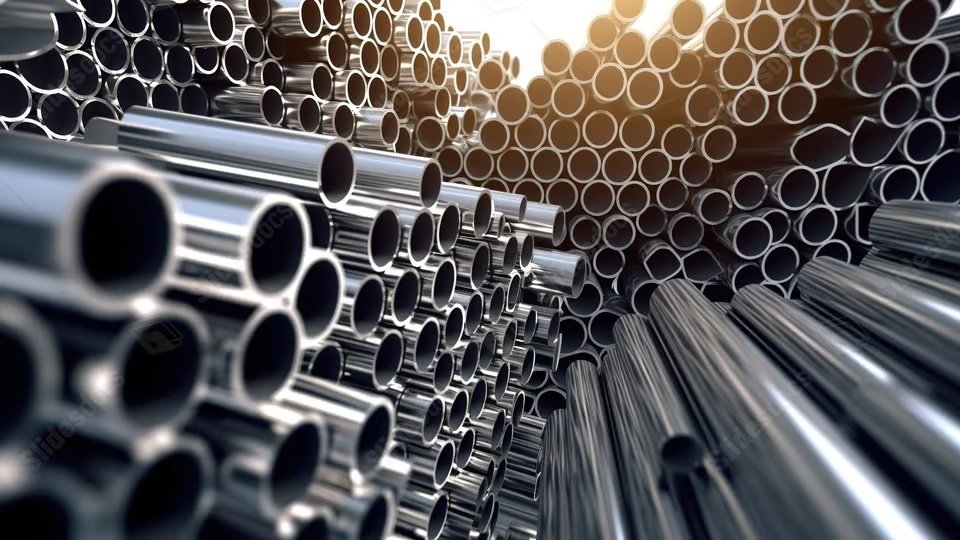
Overview of Stainless Steel Pipes
Stainless steel pipes are high-performance alloy steels containing a minimum of 10.5% chromium and a maximum of 1.2% carbon. They offer excellent corrosion resistance through a protective Cr₂O₃ passive layer, combined with strength, ductility, and toughness. These properties make them suitable for high-temperature environments and harsh chemical conditions.
Common applications include food processing, chemical and pharmaceutical industries, marine systems, construction projects, and automotive pipelines. Selecting the right stainless steel grade is critical to ensure durability, efficiency, and compliance with safety standards.
Stainless Steel Grading Systems
SAE 3-Digit System
The SAE three-digit system classifies stainless steel based on primary alloying elements and carbon content. Widely used in automotive, aerospace, and medical sectors, this system helps engineers identify the right material for mechanical performance and corrosion resistance.
For example, austenitic grades such as 304 and 316 are chosen for their outstanding corrosion resistance, while martensitic grades are selected for high strength and wear resistance applications.
ASTM 6-Digit System
The ASTM system starts with “A” to denote ferrous materials, followed by a detailed six-digit code indicating alloy composition, mechanical properties, and corrosion resistance.
ASTM standards ensure consistent quality and regulatory compliance, guiding engineers in material selection across construction, chemical, and medical applications. Testing procedures defined in ASTM standards include mechanical, chemical, and corrosion resistance evaluations, guaranteeing reliability.
Austenitic Stainless Steel Pipes
Austenitic stainless steels are non-magnetic, highly corrosion-resistant, ductile, and weldable. They retain their strength even at elevated temperatures (~1500°F), making them versatile across industries.
Common Grades and Applications
| Grade | Alloy Composition | Key Features | Applications |
| 301 | 17–19Cr, 7–12Ni | High ductility, fatigue strength | Shaped products, automotive, appliances |
| 302 | 18Cr–8Ni | Slightly higher strength than 304 | Food, chemical processing |
| 303 | 18Cr–8Ni–S | Free-machining | Machinery parts |
| 304 / 304L | 18Cr–8Ni | Standard corrosion resistance | Kitchen appliances, food & beverage, construction |
| 309 | 22Cr–12Ni | High temperature resistance | Chemical plant pipes, radiant tubes |
| 316 / 316L | 16–18Cr, 10–13Ni, 2–2.5Mo | Marine grade, chloride-resistant | Food, pharmaceutical, nuclear, chemical |
| 316Ti | 18Cr–12Ni–Mo–Ti | Intergranular corrosion resistance | High-temp chemical applications |
| 321 | 18Cr–9Ni–Ti | Weld decay resistance, high-temp | Chemical plant, boilers, aerospace |
| 347 | 18Cr–9Ni–Nb | Intergranular corrosion resistance | Chemical plant pipes, high-temp |
Notes:
- 316 contains molybdenum, providing superior chloride corrosion resistance – ideal for marine and coastal applications.
- Cold working can slightly increase hardness, while welding low-carbon grades (304L, 316L) reduces carbide precipitation risks.
Ferritic Stainless Steel Pipes
Ferritic stainless steels are magnetic, moderately corrosion-resistant, and not heat-treatable. They resist chloride stress corrosion and are widely used for automotive and industrial applications.
| Grade | Alloy Composition | Features | Applications |
| 408 | 11% Cr, 8% Ni | Heat resistant | Industrial piping |
| 409 | 10.5–11.7% Cr | Economical | Vehicle exhaust systems |
| 416 | 12% Cr + S | Free-machining | Fasteners, valves |
| 430 | 17–18% Cr | Decorative, formable | Trim, water heaters |
| 444 | 19Cr–2Mo–Ti/Nb | Improved corrosion resistance | Water heaters, chemical |
| 446 | 25Cr–N | High-temp resistance | Industrial applications |
Martensitic Stainless Steel Pipes
Martensitic stainless steels have high carbon content, offering high strength, hardness, and wear resistance. They are magnetic and suitable for mechanical and aerospace components.
| Grade | Alloy Composition | Features | Applications |
| 410 | 11.5–13.5% Cr | High strength, hardness | Valves, pump parts, shafts |
| 420 | 12–14% Cr | Good corrosion resistance, hardness | Surgical instruments, cutlery |
| 431 | 15–17% Cr, 1.25–2.5% Ni | High strength, corrosion resistance | Aircraft components, fasteners |
| 440C | 16–18% Cr, 0.95–1.2% C | Excellent hardness & wear resistance | Bearings, cutting tools |
Precipitation-Hardening / Duplex Stainless Steel
These grades combine high strength with good corrosion resistance. Duplex stainless steels merge austenitic and ferritic properties, delivering high mechanical and chemical performance.
| Grade | Alloy Composition | Features | Applications |
| 17-4 / 630 | 17% Cr, 4% Ni | High strength, moderate corrosion | Valves, gears, bolts, shafting |
| UNS S31803 / SAF 2205 | 22% Cr, 5–6% Ni, 3% Mo | Excellent corrosion, weldable | Chemical, oil & gas, desalination |
| UNS S32205 / SAF 2205 | Similar to S31803 | Stress corrosion resistance | Offshore, marine, chemical |
| UNS S32750 / SAF 2507 | 25% Cr, 7% Ni, 4% Mo | Super duplex, exceptional corrosion & pitting resistance | Offshore, chemical, desalination |
| UNS S32760 / Zeron 100 | Higher Cr, Ni, Mo | Superior corrosion fatigue & erosion resistance | Extreme marine & chemical environments |
Comparing 304 and 316 Stainless Steel
- Composition: 316 contains 2–3% molybdenum; 304 does not.
- Corrosion Resistance: 316 > 304, ideal for marine environments.
- Magnetism: Both are non-magnetic; cold working may slightly increase magnetism.
- Cost: 316 is more expensive due to Mo content.
- Applications:
- 304: Food, beverage, kitchen, architectural panels
- 316: Marine, chemical, surgical, nuclear, coastal regions
- 304: Food, beverage, kitchen, architectural panels
How to Choose the Right Grade
Assess Working Environment
Evaluate pH extremes, temperature, stress, and chloride exposure. Austenitic 304 and 316 maintain strength and corrosion resistance across diverse environments.
Consider Mechanical Requirements
- Strength: Resistance to deformation or fracture
- Ductility: Ability to deform without breaking
- Toughness: Energy absorption before fracture
Form and Fabrication
Tubes, bars, sheets may require bending, coiling, or welding. Cold working can harden material but reduce elongation and impact resistance. Use low-carbon grades to minimize carbide precipitation during welding.
Customer Preferences
Surface finish options: bright, electropolished, pickled, matte, black oxide. Certifications: ASTM or ISO for compliance in industrial applications.
Cost & Availability
High-performance alloys may cost more initially but reduce maintenance and downtime. Life-cycle cost analysis helps ensure a long-term, cost-effective investment.
ASTM Standards for Stainless Steel Pipes
| Product Type | ASTM Standard | Description |
| Flat Products | A167, A176, A666, A693 | Stainless/heat-resisting sheets, plates, strips |
| Long Products | A276, A314, A493, A564, A565, A582 | Bars, billets, wire, forgings, free machining steel |
| Tubes & Pipes | A182, A268, A269, A312, A358, A403, A409, A511, A554, A632, A731, A789, A790, A813, A814 | Seamless/welded, ferritic/austenitic, mechanical tubing, pipe fittings |
| Forgings | A473, A705 | Stainless & heat-resisting steel forgings |
| Castings | A297, A743, A744, A890 | General and severe service corrosion-resistant castings |
ASTM standards provide a framework for quality, compliance, and standardized classification, ensuring materials perform reliably in demanding applications.
Conclusion
Stainless steel pipes cover a wide range of grades: Austenitic, Ferritic, Martensitic, Precipitation-Hardening, and Duplex. Each grade offers unique chemical compositions, mechanical properties, corrosion resistance, and application suitability.
Selecting the right stainless steel grade is essential for ensuring long-term durability, safety, and cost-effectiveness across industries. Proper understanding of composition, fabrication, environment, and ASTM compliance ensures the ideal material choice for any project.
Your Trusted Stainless Steel Pipe Partner – Hanhuang Steel
Hanhuang Steel offers expert guidance and high-quality stainless steel pipes across all grades – Austenitic, Ferritic, Martensitic, Duplex, and Precipitation-Hardening. Engineered for corrosion resistance, strength, and reliability, we help you choose the right grade for every application.
Contact us today for tailored stainless steel piping solutions.