

Introduction
Stainless steel tubing plays a pivotal role across a wide range of industries, from chemical processing and oil & gas to aerospace and food production. Its exceptional corrosion resistance, strength, and durability make it an indispensable material for critical systems and structural applications alike.
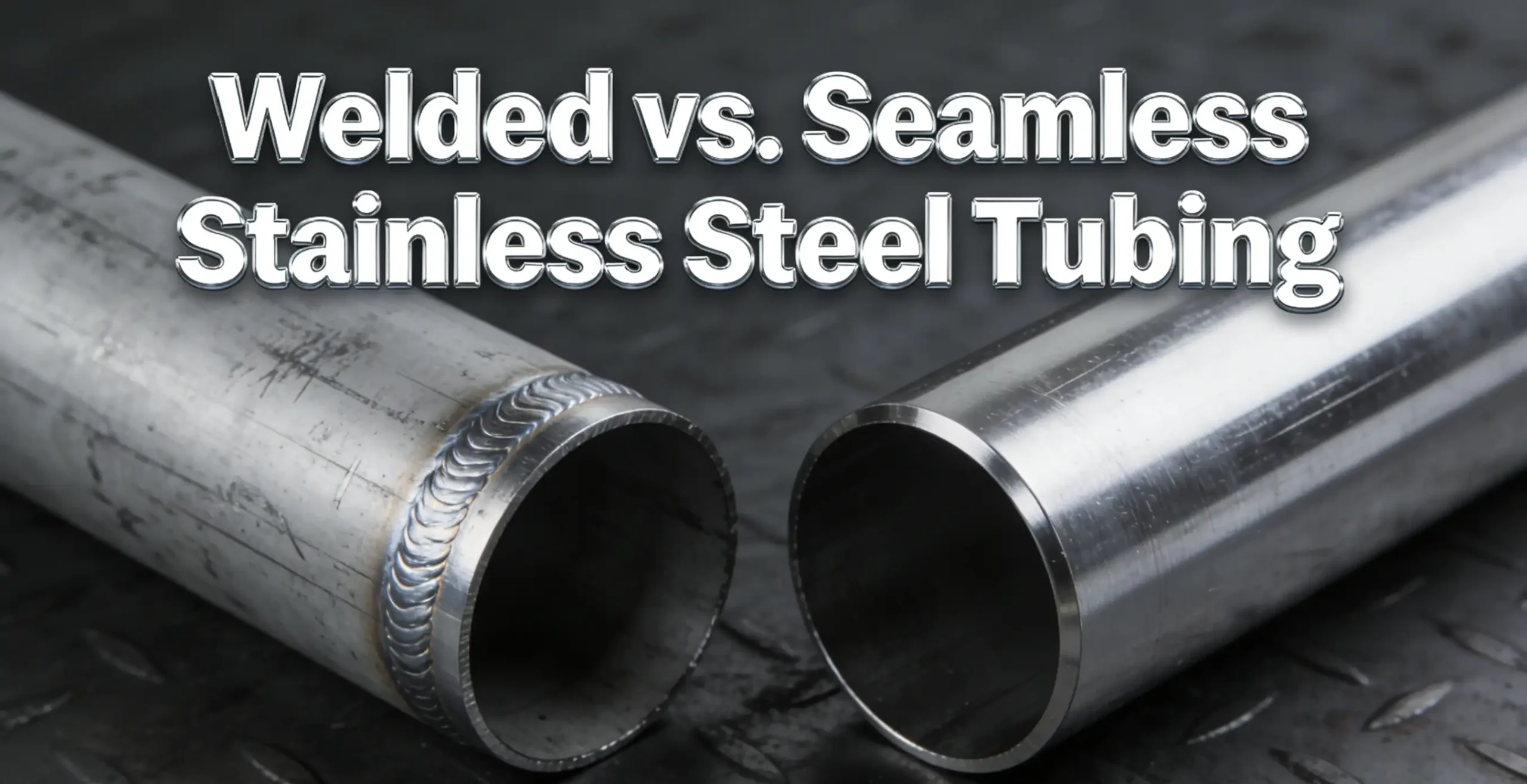
Choosing between welded and seamless tubing isn’t just a matter of preference—the manufacturing method directly affects performance, durability, and cost. This guide will walk you through the key differences, applications, and factors to consider when selecting stainless steel tubing for your projects.
Understanding Stainless Steel Tubing
Definition and Alloy Composition: Stainless steel tubing is typically made from alloys containing chromium (Cr), nickel (Ni), molybdenum (Mo), and sometimes titanium (Ti). These elements provide a protective layer against corrosion while enhancing mechanical strength and durability.
General Properties:
- Excellent corrosion resistance
- High strength and durability
- Versatility in temperature and pressure conditions
Common Applications Across Industries:
- Industrial: Oil & gas pipelines, chemical plants, power generation systems
- Structural: Construction frameworks, marine structures, aerospace components
- General: Plumbing systems, food & beverage equipment, decorative installations
Welded Stainless Steel Tubing
Manufacturing Process:
Welded tubing is produced by rolling stainless steel strips or sheets into a cylindrical shape, followed by welding along the seam. Common methods include:
- ERW (Electric Resistance Welding) – ideal for thin walls
- LSAW (Longitudinal Submerged Arc Welding) – suited for thicker walls
- SSAW (Spiral Submerged Arc Welding) – used for large diameters
Optional post-weld treatments such as cold rolling or forging can refine the weld bead for smoother finishes and tighter tolerances.
Key Characteristics:
- Visible or bead-reduced weld seam
- Thin-wall, large-diameter options
- Achieves tighter tolerances via cold forming
Advantages:
- Lower production cost and faster lead times
- Availability in long lengths and large diameters
- Consistent concentricity, suitable for structural and general-purpose projects
Limitations:
- Stress concentration at the weld seam reduces pressure ratings
- Slightly lower corrosion resistance in harsh environments
- Not ideal for heavy-wall or high-pressure applications
Seamless Stainless Steel Tubing
Manufacturing Process:
Seamless tubing starts with a solid billet, which is pierced and extruded into a hollow tube. The tube is then reduced in diameter and wall thickness through pilgering or cold drawing. For precision tubes, hot rolling and additional cold drawing ensure tight dimensional tolerances.
Key Characteristics:
- No weld seam → uniform strength throughout
- Higher pressure ratings and superior corrosion resistance
- Clean surface finish with high purity
Advantages:
- Ideal for critical applications, high-pressure systems, and extreme environments
- Better durability and reliability with minimal weak points
Limitations:
- Higher production costs
- Limited diameter range, less suitable for thin-wall, large-diameter tubes
- Longer lead times due to complex manufacturing
Seamless vs Welded Tubing – Side-by-Side Comparison
| Feature | Seamless Tubing | Welded Tubing |
| Manufacturing | Extruded from solid billet, pilgered/drawn | Rolled and welded from strips/sheets |
| Strength | Higher, uniform, no weak points | Moderate, seam may create stress points |
| Corrosion Resistance | Superior, smooth surface | Slightly lower, depends on weld quality |
| Size Availability | Smaller diameters, thicker walls | Larger diameters, thin walls |
| Cost | Higher | Lower |
| Lead Time | Longer | Shorter |
| Ideal Applications | Critical, high-pressure, chemical, oil & gas, aerospace | Structural, general-purpose, cost-sensitive projects |
Factors to Consider When Choosing Tubing
- Performance Requirements: Pressure, temperature, and corrosion resistance
- Size and Wall Thickness Availability: Seamless for smaller diameters and thick walls, welded for larger diameters
- Cost and Budget Constraints: Welded tubing is more cost-effective, seamless offers long-term reliability
- Industry Standards & Certifications: ASTM, ASME, API
- Lifecycle and Maintenance Considerations: Factor in durability, ease of replacement, and total cost of ownership
Applications of Stainless Steel Tubing
- Oil & gas pipelines
- Chemical processing plants
- Nuclear power systems
- Aerospace components
- Hydraulic systems
- Power generation equipment
Welded Tubing:
- Construction frameworks and structural supports
- Marine structures and ship components
- Plumbing and HVAC systems
- Food & beverage processing lines
- Decorative installations
Comparison Chart for Applications:
| Feature | Seamless Tubing | Welded Tubing |
| Best Use | High-pressure, critical environments | Cost-efficient, structural, and general uses |
| Industries | Oil & gas, chemical, aerospace, power | Construction, plumbing, automotive, food & beverage |
| Strength | High, ideal for demanding conditions | Adequate for standard applications |
| Corrosion Resistance | Superior | Moderate, depends on weld quality |
FAQs
Which is better: seamless or welded tubing?
Neither is universally better; seamless tubing excels in high-pressure or critical environments, while welded tubing is ideal for cost-sensitive, general-purpose projects.
Are seamless tubes always stronger?
Yes, due to the lack of weld seams, seamless tubing generally has uniform strength and fewer weak points.
Can welded tubes be used in high-pressure applications?
Welded tubing can handle moderate pressures, but stress at the seam reduces suitability for extreme conditions.
Why are seamless tubes more expensive?
The intricate manufacturing process, including billet extrusion, pilgering, and cold drawing, increases production costs.
How to choose the right type for my project?
Consider application needs, budget, required diameter, wall thickness, and industry standards to select the most suitable tubing type.
Conclusion
Seamless and welded stainless steel tubing each serve distinct purposes:
- Seamless tubing: Superior strength, corrosion resistance, ideal for high-pressure and critical applications
- Welded tubing: Cost-effective, versatile, available in larger sizes, suitable for structural or general uses
Selecting the right tubing requires balancing performance, cost, and project specifications. Understanding the differences ensures optimal safety, durability, and value.
About Hanhuang Steel
Hanhuang Steel supplies high-quality stainless steel pipe and carbon steel pipes suitable for industrial, commercial, and structural projects. Contact us for quotes or technical consultation to ensure your pipeline system is engineered for longevity and reliability.