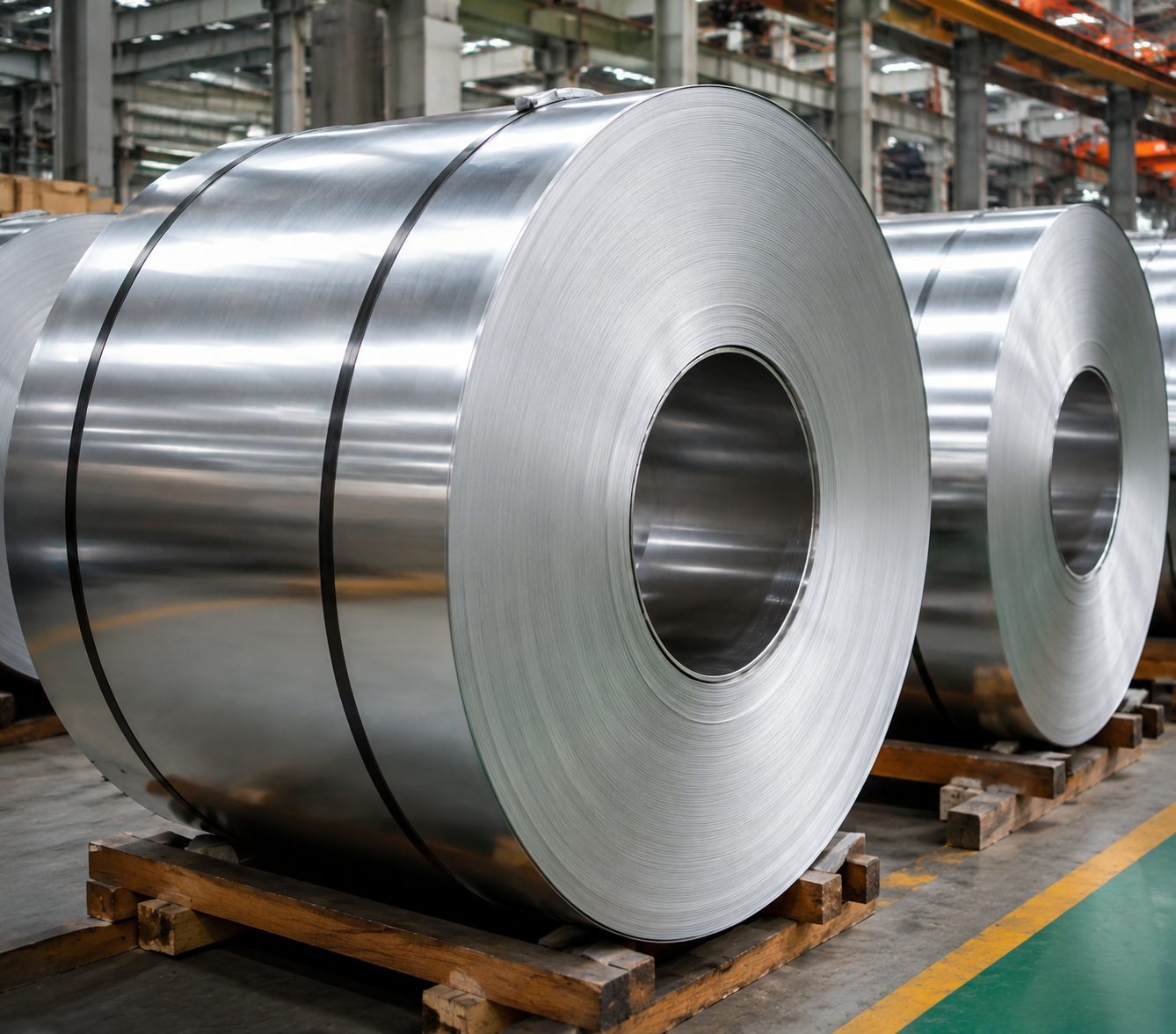


Stainless steel coil is one of the most widely used raw materials in modern manufacturing and construction industries. Known for its corrosion resistance, durability, and versatility, stainless steel coil plays a critical role in producing household appliances, automotive parts, construction materials, and industrial equipment.
In this guide, we will explore the types, grades, applications, advantages, and key buying considerations for stainless steel coils.
What Is a Stainless Steel Coil?
A stainless steel coil is a continuous sheet of stainless steel that is rolled into a coil form after hot rolling or cold rolling processes. It is supplied in various thicknesses, widths, and surface finishes depending on industrial requirements.
Because of its flexibility and strength, stainless steel coil is often used as a raw material for further processing such as cutting, stamping, bending, and welding.
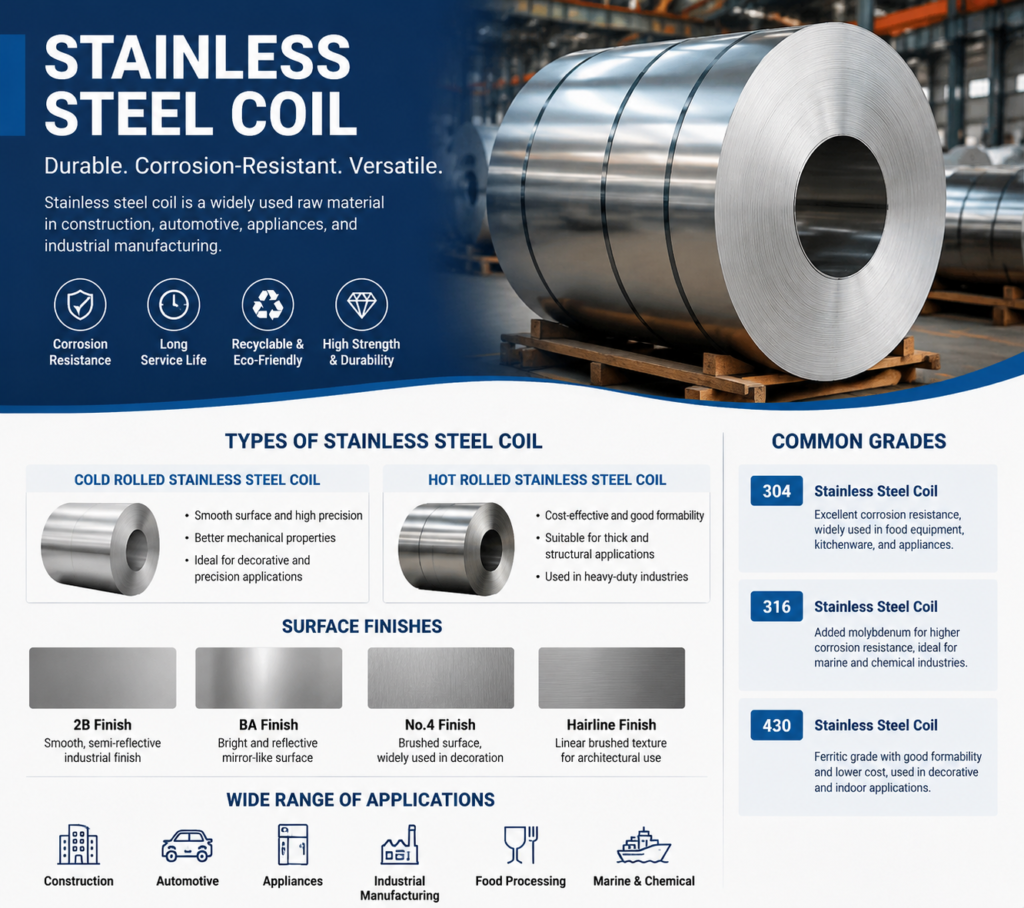
Types of Stainless Steel Coils
There are two main types of stainless steel coils:
1. Cold Rolled Stainless Steel Coil
Cold rolled stainless steel coils are processed at room temperature, which results in a smoother surface and tighter dimensional tolerances.
Features:
- High surface quality
- Better mechanical strength
- Precise thickness control
- Ideal for decorative and precision applications
Common uses:
- Kitchen appliances
- Medical equipment
- Precision instruments
- Architectural decoration
2. Hot Rolled Stainless Steel Coil
Hot rolled stainless steel coils are produced at high temperatures and are generally less smooth but more cost-effective for heavy-duty applications.
Features:
- Lower production cost
- Good formability
- Suitable for thick materials
- Strong structural performance
Common uses:
- Construction structures
- Industrial machinery
- Storage tanks
- Heavy engineering components
Common Stainless Steel Grades
Different grades of stainless steel coils are used depending on corrosion resistance, strength, and application environment.
304 Stainless Steel Coil
The most commonly used stainless steel grade.
- Excellent corrosion resistance
- Good weldability
- Widely used in food and kitchen industries
316 Stainless Steel Coil
Contains molybdenum for improved corrosion resistance.
- Strong resistance to seawater and chemicals
- Ideal for marine and chemical industries
430 Stainless Steel Coil
A ferritic stainless steel grade.
- Magnetic
- Lower cost
- Used in decorative and indoor applications
Surface Finishes of Stainless Steel Coil
Surface finish plays a key role in appearance and application performance.
- 2B Finish: Smooth, semi-reflective industrial surface
- BA (Bright Annealed): Mirror-like, highly reflective finish
- No.4 Finish: Brushed surface used in decoration
- Hairline Finish: Linear brushed texture for architectural use
Applications of Stainless Steel Coil
Stainless steel coil is used across a wide range of industries due to its versatility.
Construction Industry
- Roofing systems
- Wall cladding
- Structural components
Automotive Industry
- Exhaust systems
- Trim parts
- Structural reinforcements
Household Appliances
- Refrigerators
- Washing machines
- Microwave ovens
Industrial Manufacturing
- Chemical tanks
- Conveyor systems
- Pressure vessels
Food Processing Industry
- Food-grade containers
- Processing equipment
- Hygiene systems
Advantages of Stainless Steel Coil
Stainless steel coil offers multiple advantages that make it a preferred material worldwide:
- Excellent corrosion resistance
- Long service life
- High strength-to-weight ratio
- Recyclable and environmentally friendly
- Low maintenance cost
- Suitable for extreme environments
How to Choose the Right Stainless Steel Coil
When purchasing stainless steel coils, buyers should consider the following factors:
1. Material Grade
Choose between 304, 316, or 430 depending on corrosion resistance requirements.
2. Thickness and Width
Common thickness ranges from 0.3mm to 3.0mm, depending on application.
3. Surface Finish
Select finish based on aesthetic or functional requirements.
4. Application Environment
Marine, industrial, or indoor use will determine the best grade.
5. Supplier Reliability
Always choose a supplier with stable quality control and export experience.
Stainless Steel Coil Market Trends (2026)
The global demand for stainless steel coils continues to grow due to:
- Expansion of infrastructure projects
- Growth in automotive production
- Increasing demand for hygienic materials in food and healthcare industries
- Rising adoption of corrosion-resistant materials in coastal regions
Asia remains the largest production hub, while demand is rapidly increasing in Southeast Asia, Middle East, Africa, and South America.
Conclusion
Stainless steel coil is an essential industrial material with wide applications across construction, manufacturing, automotive, and household industries. Understanding the different grades, finishes, and types helps buyers choose the right product for their needs.
If you are sourcing stainless steel coils for your project, always evaluate material grade, surface finish, and supplier capability to ensure long-term performance and cost efficiency.