Introduction
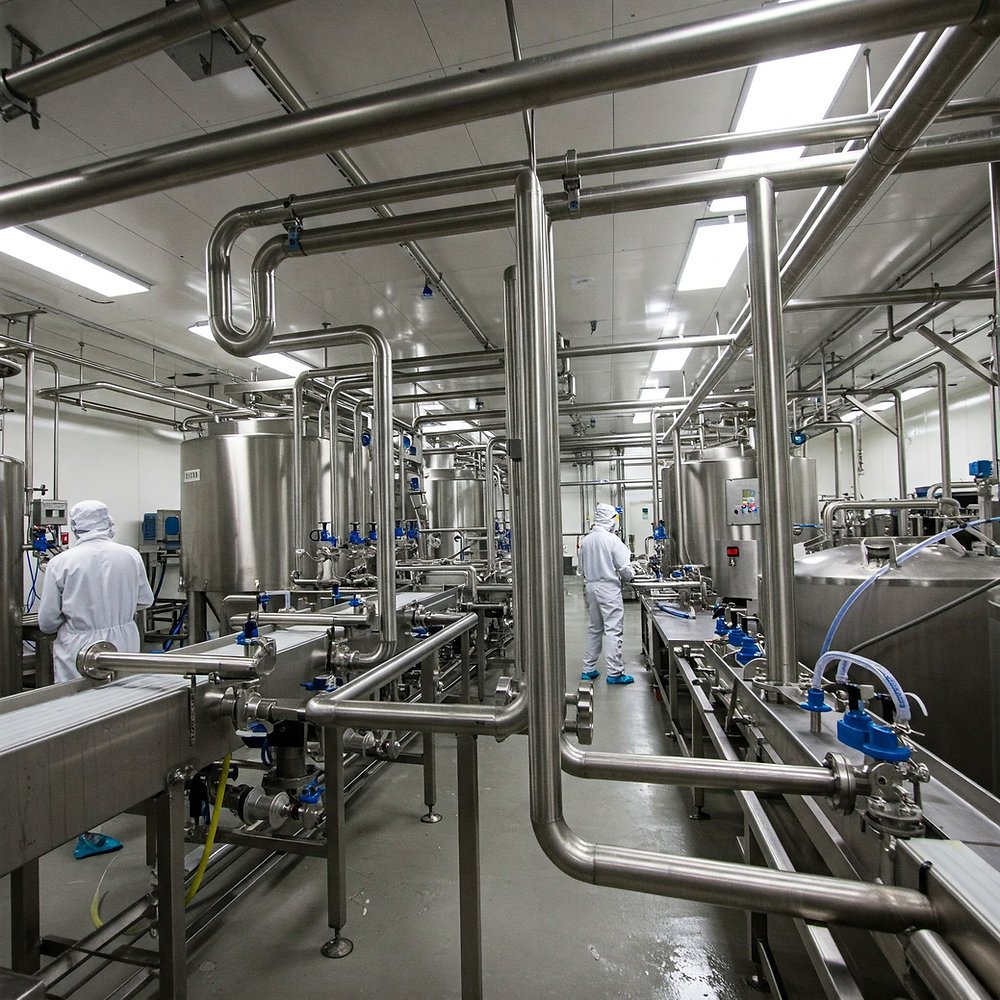
Stainless steel pipes play a critical role in the food industry. Their hygienic, corrosion-resistant, and durable properties ensure safe and efficient operations across dairy, beverage, meat, fish, sugar, baking, and brewing facilities.
By integrating stainless steel piping into your processing lines, you maintain food safety, enhance operational efficiency, and meet strict regulatory compliance standards. Whether transferring liquids, handling high-temperature steam, or integrating with sanitary systems, these pipes form the backbone of modern food production infrastructure.
Why Stainless Steel Pipes Are Ideal for Food Industry
Stainless steel pipes are the preferred choice for food processing due to several key advantages:
- Corrosion Resistance and Chemical Inertness
304 and 316 stainless steel resist rust, chemicals, and acidic or saline media, making them ideal for milk, juice, sauce, and specialty product handling. - Smooth Surface for Hygiene
Electropolished or mechanically polished surfaces minimize bacterial growth and biofilm formation, ensuring easy cleaning and long-term hygiene. - High Temperature and Pressure Resistance
These pipes withstand thermal stress in cooking, steaming, or cleaning processes while maintaining structural integrity. - Self-Healing Chromium Oxide Layer
The natural protective layer prevents surface corrosion and contamination, extending the life of your piping system. - CIP (Clean-in-Place) System Compatibility
Designed for seamless integration with CIP systems, they simplify sanitation and reduce downtime.
Key Applications of Stainless Steel Pipes
Liquid Food Transfer Systems
Stainless steel pipes efficiently handle pipelines for dairy, juice, beer, and beverage production.
- ASME BPE-standard orbital welding ensures leak-free connections.
- Ideal for acidic liquids, general-purpose transport, and specialized media.
Thermal Processing Equipment
These pipes excel in coffee machines, cooking equipment, and steam lines.
- Options include high-temperature tubes and double-walled vacuum-insulated designs for improved thermal efficiency.
- Maintain dimensional stability under heat with minimal thermal expansion.
Meat, Fish, and Specialized Food Processing
- Resistant to thermal stress, high-salt, acidic, or high-fat environments.
- Compatible with aggressive cleaning agents, maintaining product integrity and hygiene.
Food & Beverage Production Facilities
- Used in sugar, bread/milling, distilleries, and breweries.
- Seamlessly integrates with sanitary piping and processing equipment for safe and efficient operations.
Types of Stainless Steel Grades for Food Industry
304 Stainless Steel
- General-purpose, cost-effective, and easy to fabricate.
- Suitable for standard food processing applications, including dairy, beverage, and equipment piping.
316 / 316L Stainless Steel
- Enhanced chloride and corrosion resistance, ideal for high-salt or acidic products like soy sauce and fruit juices.
- Recommended for dairy, juice, and specialty production lines.
Duplex and Specialized Alloys
- Offer higher mechanical strength and stress corrosion resistance.
- Super austenitic and high-performance nickel alloys handle extreme processing conditions.
Technical Specifications and Surface Treatments
Dimensions and Customization
- Diameters: Φ6mm–Φ325mm, wall thickness customizable, lengths up to 12 meters.
- Support for non-standard sizes and small-batch production.
Surface Finish Options
- Electropolishing (EP) and mechanical polishing for smooth, hygienic surfaces.
- Internal coatings for specialized media handling.
- Surface roughness controlled to reduce bacterial adhesion.
Pressure and Temperature Ratings
- Standard PN10–PN40, customizable for high-performance applications.
- Thermal expansion considered for high-temperature stability.
Quality Assurance and Certification
Quality Systems
- ISO 9001, FDA, and 3-A compliance ensure global standards are met.
- Multi-step quality control including OES spectrometry, endoscopic inspection, and salt spray testing.
- Full traceability from raw materials to finished product with MES codes.
Sanitary and Hygiene Compliance
- Meets EHEDG and 3-A sanitary standards.
- Compatible with CIP and easy maintenance protocols.
Global Certifications & Reach
- Certified CE, RoHS, REACH for international markets.
- Multilingual support and export experience across Europe, North America, and Southeast Asia.
Sustainability and Environmental Benefits
- 100% recyclable stainless steel reduces environmental impact.
- Energy-efficient production minimizes resource consumption.
- Advanced cutting technologies reduce waste, while long product life extends sustainability benefits.
Factors to Consider When Choosing Stainless Steel Pipes
- Material selection based on food type: 304, 316, or duplex.
- Pipe diameter, wall thickness, and length for specific applications.
- Surface finish for cleaning and bacterial control.
- Welded vs seamless pipes depending on strength and pressure needs.
- Compliance with industry certifications like FDA, ISO, 3-A.
Tube Fittings, Valves, and Accessories
- Hygienic fittings maintain system integrity and safety.
- Compatible with sanitary piping and processing equipment.
- Designed for integration with CIP and high-temperature processing lines.
Frequently Asked Questions (FAQ)
How do stainless steel pipes prevent food contamination?
Smooth, polished surfaces and corrosion resistance reduce bacterial growth, preventing cross-contamination.
What maintenance is required for food-grade stainless steel pipes?
Routine cleaning, passivation, and inspections, often using CIP systems for efficiency.
How does electropolishing improve hygiene and durability?
Removes surface imperfections, enhances corrosion resistance, and minimizes bacterial adhesion.
What are the environmental benefits of stainless steel pipes?
Recyclable, long-lasting, and energy-efficient production reduces waste and conserves resources.
How are custom sizes and specifications accommodated?
Supports diameters Φ6–Φ325mm, lengths up to 12 meters, small-batch production, special surface treatments, and custom alloys.
Conclusion
Stainless steel pipes form the backbone of hygienic and efficient food processing systems. Choosing the right material, grade, and surface finish ensures compliance, safety, and sustainability.
Investing in high-quality stainless steel piping infrastructure secures long-term operational efficiency, protects product integrity, and supports environmentally responsible manufacturing.
For inquiries or custom solutions, reach out to Hanhuang Steel SS pipes and experience unparalleled expertise in stainless steel piping systems.